Walter Murch & the Role of the Audience in Film

In Michael Ondaatje’s book The Conversations: Walter Murch and the Art of Editing Film, the editor and sound designer of many Francis Ford Coppola films emerges as a true innovator and a boundlessly creative manipulator of the basic elements of film: image and sound. Murch is also uncommonly self-reflexive and shows a deep understanding for the perceptual effects that his work has on an audience. Through his art and his craft, he places viewers in the heart of battle in Apocalypse Now or firmly inside the minds of characters like Michael Corleone and Harry Caul. But Murch isn’t content with simply presenting concepts and techniques, fully-formed, to the audience. Instead, he lobbies for the creative input of everyone involved in the process of making a film, a process, Murch believes, that ends not with the final mix of a film, but with its eventual interaction with an audience. Through the course of his conversations with Ondaatje, Murch argues that the great films always leave the hardest work to the audience, the task of synthesis, of perceiving new worlds, magically emerging from nothing more than a collection of discrete sounds and images. Read more…

Sátántangó (1994)

SátántangóBéla Tarr / 1994 / fivestar

Active Ingredients: Mesmerizing photography; Subtle humor; Intricate chronology
Side Effects: Character of Irimias; Police scenes; Composition of some static shots

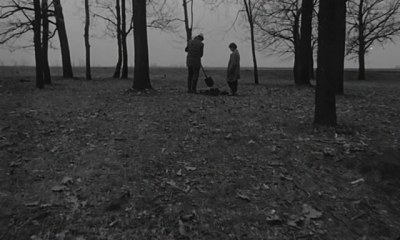
Béla Tarr’s monumental Sátántangó, which uses intensely cinematic long takes and textured black and white photography to explore the hopes and despairs of communal farmers in Hungary, clocks in at seven and a half hours. I counted approximately 150 shots over that time, making an average shot length of about 3 full minutes, though some run much longer. Tarr’s long takes are marvels of patience, technical perfection and bold artistic choices, and his film proves the incredibly diverse emotional effects of the technique. We experience the angst of his characters, not through dialogue, but as a direct result of duration, observing them against the desolate backdrop of their environment. The farmers, in fact, rarely speak, and probably don’t even think about the existential issues Tarr extracts from them, yet they live it with every breath and every gesture, and so do we. Read more…

The Cabin in the Woods (2012)

The Cabin in the Woods / Drew Goddard / 2012 / 

Active Ingredients: Meta horror concept; Chris Hemsworth; Unexpected comedy
Side Effects: Uninspired horror payoff; Lack of suspense

The horror genre is surveilled, dismembered and eviscerated in co-writers Joss Whedon and Drew Goddard’s meta comedy The Cabin in the Woods. Half of the plot will no doubt feel familiar. Five college friends drive to a creepy cabin in a remote wilderness for a weekend getaway. There’s no cell phone reception, of course, and they’ll make some poor decisions, of course, leading to a chorus from the audience: “No, don’t go in the cellar!” The other half of the plot, however, does feel novel. Read more…

World on a Wire (1973)

World on a Wire / Rainer Werner Fassbinder / 1973 /

Active Ingredients: Intriguing, ahead-of-its-time concept; Blend of sci-fi and noir
Side Effects: TV production values; Integration of technology into the film’s world

Though he lived to only 37, prolific German director Rainer Werner Fassbinder directed scores of films in just a few years. Maybe it’s not surprising, then, that one remained largely forgotten. Just last year, Fassbinder’s 1973, 3-and-a-half-hour television miniseries World on a Wire was rediscovered, given a small theatrical release and issued on a beautiful Criterion Collection Blu-ray. The gap of almost 40 years only heightens the impact of this paranoid, extremely prescient vision of the future of technology. Read more…

Cannes 2012 Lineup Announced

Earlier today the Festival de Cannes, the most prestigious film festival in the world, announced the complete lineup of films vying for the coveted Palme d’Or, as well as those screening out of competition. After consecutive wins for Uncle Boonmee Who Can Recall His Past Lives and The Tree of Life, two of my favorite films but both somewhat controversial choices, I’ll be very interested to see which film generates the most buzz along the Riviera. And, of course, to see which film gets greeted with the infamous Cannes boos. The early reaction around the Internet is that this lineup skews a bit heavily towards American filmmakers, but many big names in international cinema are also represented. Here’s a selection of a few projects I’m most interested in. Read more…

THX 1138 (1971)

THX 1138 / George Lucas / 1971 /

Active Ingredients: Strong, stark white composition; Unconventional scene structure
Side Effects: Over indulgence building a dystopian world

As the first film produced by Francis Ford Coppola’s American Zoetrope Studios, THX 1138 is an interesting declaration of the type of American independent films the collective was to create. Steeped in the adventure and sci-fi of 1950s serials, and yet formally daring, George Lucas’s first feature looks to the past for its established, crowd-pleasing generic influences, and, though it’s not a revolutionary film, points away from the classical era and towards the experimentation taking place in the films of the New Hollywood and beyond. Read more…

The Mouth of the Wolf (2009)

The Mouth of the Wolf / Pietro Marcello / 2009 / 

Active Ingredients: Mix of archival footage; Exploration of memory; Texture of images
Side Effects: Reenactments and interviews; Inconsistent use of styles

Memories both personal and nation collide in Pietro Marcello’s thoughtful evocation of the ghosts of the past, The Mouth of the Wolf. Cinema shares a mysterious link with memories. For Tarkovsky, both phenomena are moored to time, the medium on which we register our experiences as memories and the dimension unique to film art. It’s not surprising then that in Marcello’s film memories manifest themselves as forgotten fragments of footage, strange pieces of archival material resurrected to fill in the space between past and present. Marcello blends these cinematic ghosts with his own footage, both documentary and narrative, depicting the decades-long love between two men from Genoa. Through lengthy stints in prisons and hard years on the streets, the pair stays together, following in the footsteps, somehow, of the city’s founders. Read more…

Once Upon a Time in Anatolia (2012)

Once Upon a Time In Anatolia / Nuri Bilge Ceylan / 2012 /

Active Ingredients: Colors, lighting and photography; Humor and pathos
Side Effects: Change in tone and scope in the third act

A barren field lit only by the last gasps of dusk and the bouncing beams of approaching headlights. It’s nameless terrain, devoid of distinguishing characteristics, too much like all the other fields spotting the countryside. These empty locations are the setting for much of Turkish director Nuri Bilge Ceylan’s quietly effecting Once Upon a Time in Anatolia and for the search for a buried corpse at the film’s center. From the beginning, it seems like a fool’s errand; the ragtag collection of policemen, a prosecutor and a doctor feebly follow a pair of confessed killers in search of the body. Unfortunately, their memory is hazy. The victim might have been buried in an area with a round tree. Perhaps the field sloped slightly. It could be this one or it could be miles away. Read more…

Interview with Jon Shenk, Director of “The Island President”

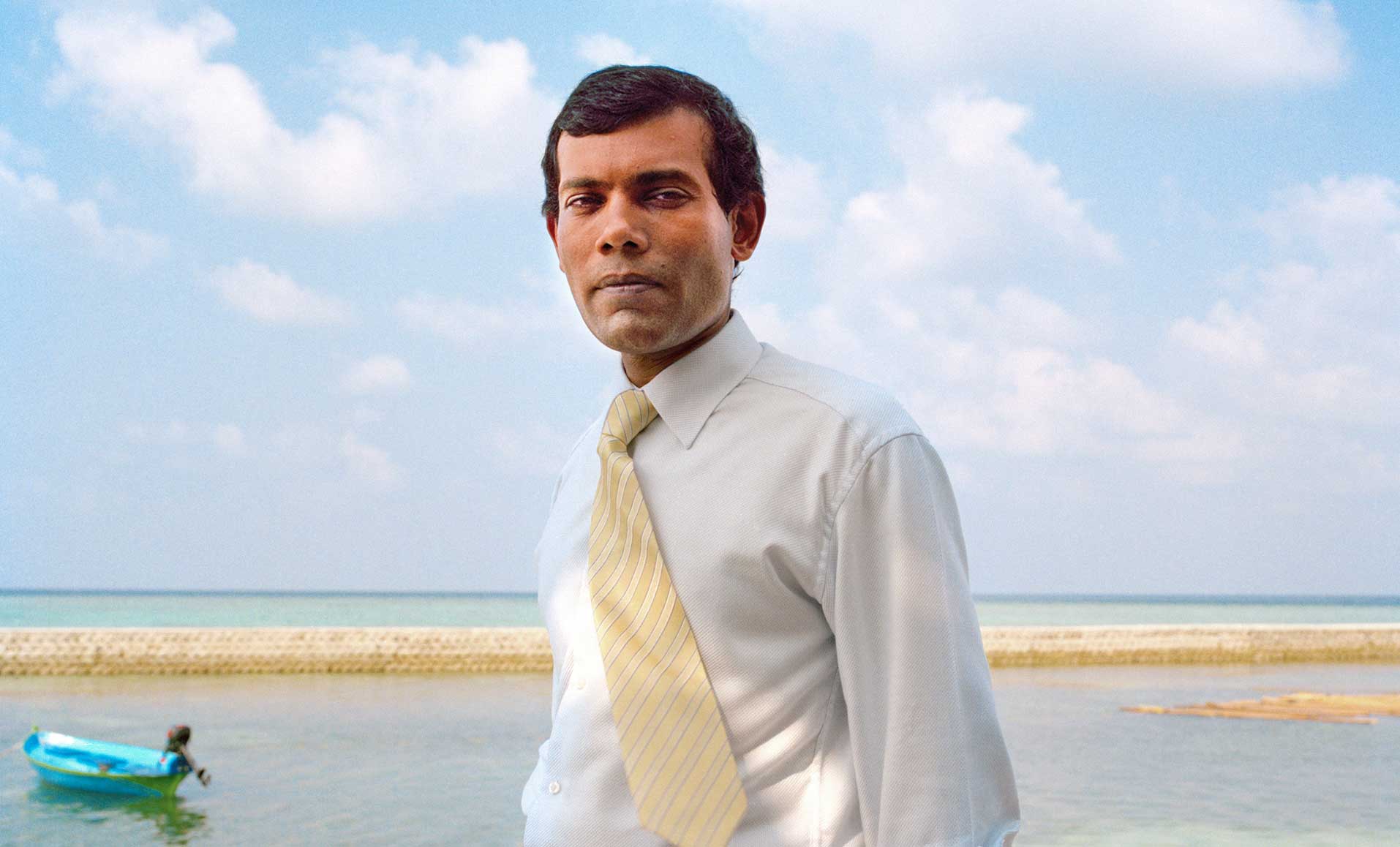
The Island President is a documentary about global warming. But, of course, it’s more than that. It’s a David and Goliath story, and an observational account of a unique man fighting a unique battle. As the lowest-lying country in the world, the Maldives is seriously threatened by climate change, and President Mohamed Nasheed struggle is to bring the concerns of his tiny nation to the attention of the world during 2009’s Copenhagen Climate Conference. I had a chance to talk to director Jon Shenk about navigating that balance between a social issue and a personal story. He also shares a bit about the film’s impressive photography, the anxiety of never knowing what could happen in a documentary and President Nasheed’s lasting impact as a grassroots leader.

jon-shenk-filming-nasheed

The Island President is playing now at Film Forum in New York.

Read more…

The Island President (2012)

The Island President / Jon Shenk / 2012 /

Active Ingredients: Photography; Unique perspective of the Maldives
Side Effects: Personal dimension; Political drama

In 2008, while Barak Obama was proclaiming that yes, in fact, we can, a very different nation was experiencing a similarly unlikely and dramatic change in political climate. The Maldives, an archipelago nation of nearly 2,000 islands, saw the democratic election of their first new president in 30 years, Mohamed Nasheed. But enduring imprisonment, torture and exile to bring democracy to the Maldives was only the beginning of Nasheed’s journey. As the lowest-lying country in the world, the Maldives is uniquely imperiled by the threat of climate change; many of its islands are already seeing their shores steadily erode, and, Nasheed claims early in the documentary The Island President, if the global community fails to react the Maldives could be completely wiped off the map.

Luckily, though, The Island President is not simply a film about global warming. Rather, it’s a story of survival and tenacity, about a leader forced by circumstances into testing the limits of his influence and raising a call to arms. Read more…