Q&A with Abel Ferrara, Director of 4:44 Last Day on Earth

At last fall’s New York Film Festival, director Abel Ferrara, along with actress Shanyn Leigh, spoke about the inspiration behind their film 4:44 Last Day on Earth, which opens today, during a Q&A. Indeed, the exact inspiration is a bit of a mystery to Ferrara. “These films, where they come from, God only knows,” he admitted, although he added that “these ideas are out there. The zeitgeist is there.” When pressed to discuss the germ of his story, though, Ferrara since death is “the one fact that’s given to you in life” it’s surprising nobody actually talks about. Read more…

4:44 Last Day on Earth (2012)

4:44 Last Day on Earth / Abel Ferrara / 2012 /

Active Ingredients: Emotional premise; Use of technology; Cinematic montages
Side Effects: Histrionics; Politics; Identifying a cause

It’s the end of the world as we know it, and the couple at the center of 4:44 Last Day on Earth feel anything but fine. Due to humans’ disrespect of the ozone layer (“Al Gore was right,” a news reporter says), mankind has but a few hours left on the planet. How would you spend your remaining time, the film asks? Two artists living on the lower East Side of Manhattan simply want to spend it together, making love, making art and coming to terms with death. Along the way, however, heated Skype calls with family and friends and encounters with the city around them lower their morale and Sisco’s (Willem Defoe) dark past threatens to keep them apart. Read more…

The Servant (1963)

The Servant / Joseph Losey / 1963 /


Active Ingredients: Social criticism; Changes in cinematography
Side Effects: Romantic subplots; Reactionary philosophy?

The Servant is an astute, acerbic portrait of a country—or a least a country’s cinematic presence—in transition. In 1962 London Tony, a wealthy, lazy young lothario hires a manservant to help him arrange his home, prepare his meals and allow him to continue drinking without needing to lift finger or risk suffering societal disgrace. The film begins innocently enough, in a manner befitting the upstairs/downstairs model of previous decades. The aloof, proper new servant takes pride in his work, admirably keeping his master afloat, while Tony speaks vaguely of a future business endeavor clearing the jungles of Brazil (or is it Africa?), which will, of course, never happen. The servant is “a gentleman’s gentleman” he says, a man who maintains an impeccable presence, an immaculate exterior upon which his superiors place their confidence. Read more…

Werner Herzog @ BAM: Music in Film

Werner Herzog at BAM

Werner Herzog has been a busy man lately. He released two feature documentaries last year, Cave of Forgotten Dreams, which made my Top 10 Films of the year, and Into the Abyss. He’s also expanding the latter film into a new TV series, “On Death Row,” which premieres March 9th on Investigation Documentary. In addition to his normal film work, Herzog is also a featured artist at this year’s Whitney Biennial, offering a multimedia installation curiously titled “Ode to the Dawn of Man.” That piece reexamines the work of the largely-unknown Dutch artist Hercules Segers, setting projections of his drawings and etching to music. It’s not surprising, then, that this nexus between images and music should be on the mind of this great filmmaker. How does the use of music change the perception of the images of a film? How can we explain the huge emotional impact that a successful matching of sound to image makes? Is there such a thing as the wrong music for a film? Herzog visited the Brooklyn Academy of Music last week to discuss these and other questions surrounding the use of music and film, and, as always with this inimitable persona, the results were equally illuminating, maddening and hilarious.

Read more…

The Salt of Life (2012)

The Salt of Life / Gianni Di Gregorio / 2012 /

Active Ingredients: Cast of recurring characters; Concerns about aging
Side Effects: Lack of humor; Handheld camerawork

saltoflife_dogs2012

The Salt of Life is a wispy Italian idyll, a springtime jaunt through Rome paced like an al fresco lunch. It’s also a gentle comedy about aging and reclaiming flagging self-confidence, and if it meanders a bit to reach its destination, like a Roman retiree, I suppose it can be forgiven. The film is the followup to last year’s critically-acclaimed Mid-August Lunch by Gianni Di Gregorio, a writer-director-actor who reminds me of Woody Allen. Like Woody, Gianni’s on-screen persona finds that life simply happens to him. Gianni is henpecked by his wife and daughter, used by his beautiful young neighbor and passively bullied by his mother. He may not have quite so many witty responses to the world going on around him as Woody, but he’s equally incapable of altering his place in it—until, spurred on by a friend, he sets about to find the motivation and (sex) drive that middle age has sapped him of. Read more…

Ten (2002)

Ten / Abbas Kiarostami / 2002 /

Active Ingredients: Natural script; Keen, understated commentary
Side Effects: Flat, static style

Abbas Kiarostami’s brilliantly understated Ten derives an emotional impact from the simplicity of its conceit, without ever feeling maudlin or cheaply sentimental. The film is composed of ten segments, each documenting a car ride and a conversation between a young female driver and her passengers. Austerely shot, often in long, unbroken takes, each segment explores the complex psychology of women in modern-day Iran. Kiarostami’s minimalist, low-fi aesthetic allows the viewer to register small changes that flicker in and out of the characters’ faces and forces intimacy. While the tactic benefits the film, it does not feel an essential component to its power.

Miraculously, this very talky film never feels obviously scripted. Kiarostami has a remarkable ear for the ebbs and flows of natural conversations. He knows that people talk in circles not straight lines, just as the driver circles aimlessly and continually, much to the chagrin of her passengers. Consequently, the heart of each dialogue is uncovered only after false starts, preambles, tangents and diversions. The inner lives of the characters, their histories and relationships emerge so naturally that the sophistication of its construction passes unnoticed. It’s as if we know these characters and simply ride alongside them. Read more…

The Lumières, “The Artist” and the Power of Nostalgia

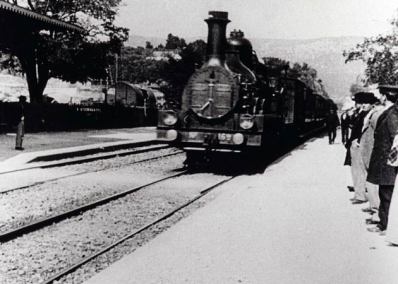
Arrival of a Train

Nostalgia can be a powerful emotion in film, and a dangerous force. Simply hearing the sound of an old projector or seeing an old-fashioned boxy aspect ratio and a frame with rounded edges is enough to evoke it. With The Artist poised to dominate award season this year, filmmakers and audiences seem more interested than ever in exploring—or perhaps exploiting—the effects of nostalgia. Its detractors have accused The Artist of wielding nostalgia like a weapon, a technique guaranteed to produce an intended affect, but its success proves there is still room for a thoughtful and even humorous examination of how film creates such a strong, romantic connection to its own past.

While The Artist is a rare—though not unprecedented—contemporary silent film, a full 41 directors previously explored the issue of nostalgia in 1995’s Lumière and Company, a collection of shorts produced to celebrate the centennial of the Lumière Brothers’ first ever films. The filmmakers were challenged to use the unmistakable aesthetics of the Lumières’ camera and the constraints of an approximately 50-second running time to do something new, or perhaps old. Some directors in the anthology actively combat the feeling of nostalgia for an older cinema. Patrice Laconte, for example, recreates the famous Arrival of a Train at La Ciotat, using the same camera placement and framing to photograph a highly modern train rushing past the station. Merchant and Ivory use the look of the Lumières’ primitive camera to lure the viewer into a feeling of nostalgia, photographing the Eiffel Tower before dollying to reveal a McDonald’s invading the scene. Another batch of filmmakers, however, embraces the effect of nostalgia, exemplified by a charming and creative short from Claude Lelouch. Read more…

Man with a Movie Camera (1929)

The Man with the Movie Camera / Dziga Vertov / 1929 / 

Active Ingredients: Kinetic style; Advancement of a cinematic language
Side Effects: Beach scenes

Man with a Movie Camera opens with a declaration, which, like the film that follows it, remains iconoclastic and modern even now, over 80 years later. “This experimental work aims at creating a truly international language of cinema,” the manifesto reads, “based on its absolute separation from the language of theater and literature.” Unfortunately, director Dziga Vertov’s call to arms has rarely been answered in the intervening years of film history. Of course there have been filmmakers since Vertov to explore the potential of film as its own uniquely expressive and temporal medium (Terrence Malick comes to mind), but, so often chained to story and narrative, film art remains in its infancy. Thus, Man with a Movie Camera feels as shocking, aggressive and revolutionary today as it must have 80 years ago. A hyperkenetic, experimental combination of images, photographic effects and raw adrenaline, the film communicates deeply and effectively with each breathless cut. Read more…

The Third Man (1949)

The Third Man / Carol Reed / 1949 /

Active Ingredients: Eccentric and original style; Superb acting
Side Effects: Perhaps an overuse of canted angles

The mystery of a death that never happened and a tale of wartime horrors with no fighting, The Third Man is an offbeat noir that not only ignores the conventions of its era, but seems to be unaware of their existence. From the jaunty, anachronistic zither score to a barely-present main character, the film follows its own logic confidently and unwaveringly. The Third Man is remembered for its eccentricities, but it’s the remarkably solid core that keeps it all together.

The perpetually-overshadowed Joseph Cotton plays Holly Martins, a quintessential American writer of quintessentially crummy American dime novels. He’s a bit of a boar, an offscreen drunk and a fish-out-of-water with a nose for trouble. He has no business being in Vienna just as the ubiquitous dramatically-canted camera angles have no business dominating a standard thriller. Yet still, he sticks around, much to the chagrin of the Europeans, to locate the shadowy third man seen carrying the body of his friend, Harry Lime. Read more…

The Best Performances and Scenes of 2011

2011 is already over, but it’s always fun to indulge in more of the year-end awards and Top 10 lists. You can find my Top 20 films here and here, but in this post I list my favorite performances of the year, both lead and supporting. You’ll also find my Top 10 scenes of the year and my favorite, the year in miscellaneous superlatives.

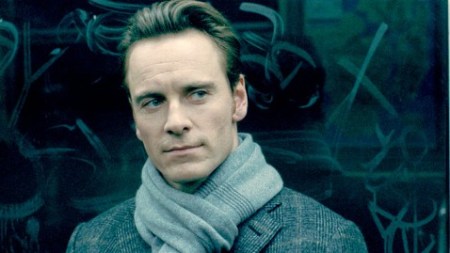
ht_michael_fassbender_shame_jef_111201_wblog.jpg

Best Lead Performances of 2011

  • Choi Min-sik – I Saw the Devil
  • Steve Coogan – The Trip
  • Michael Fassbender – Shame
  • Gary Oldman – Tinker, Tailor, Soldier, Spy
  • Owen Wilson – Midnight in Paris

Best Supporting Performances of 2011

  • Bruce Greenwood – Meek’s Cutoff
  • Tom Hardy – Tinker, Tailor, Soldier, Spy
  • Ben Kingsley – Hugo
  • Brad Pitt – The Tree of Life
  • Viggo Mortensen – A Dangerous Method

[I feel bad that none of our great actresses made my lists this year. Some of the best performances were Michele Williams in Meek’s Cutoff, Elizabeth Olsen in Martha Marcy May Marlene and Elena Anaya in The Skin I Live In.] Read more…