Video Essay: The Art & Politics of Jean-Luc Godard

[Part of VARIABLES, a series of essays on the art and politics of Jean-Luc Godard]

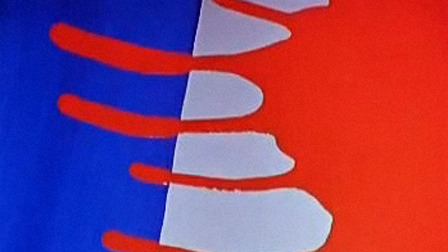
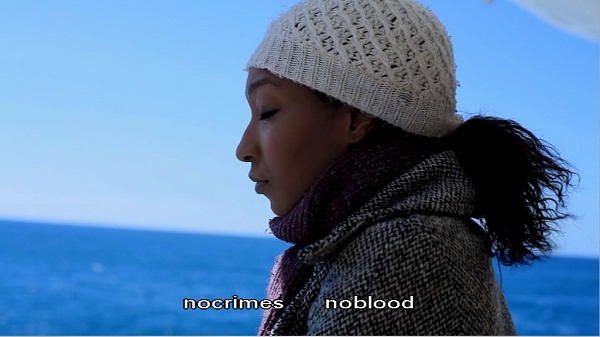
To conclude my series of essays on Jean-Luc Godard, I’m posting a short video essay entitled VARIABLES, on the intersection between Godard’s style and his politics. Far more than allusions to literature or overt philosophizing, Godard’s art revolves around these two poles, the extent to which his experimentation with the language of film generates new ways of seeing the world. The video, using many of Godard’s own techniques of montage, explores how the connections, or variables, between his images constitutes the political dimension of this unique artist.

After watching the video, continue below to read more on these variables, rendered even more apparent in the wake of the revolutionary use of 3D in Godard’s new film, Goodbye to Language.
Read more…

Exploding Form: Late Godard and James Joyce

navajoenglish

[Part of VARIABLES, a series of essays on the art and politics of Jean-Luc Godard]

The films of Jean-Luc Godard abound with literary quotations. From a government document on prostitution to Les Fleurs du mal, nothing is off limits to Godard, from high culture or low. While his many literary reference points help expand and trouble his thematic palate, the work and career of one author makes a compelling analogue to the drastic formal innovations of late-period Godard: James Joyce. Read more…

National Gallery (2014)

National Gallery / Frederick Wiseman / 2014 / fourstar

Active Ingredients: Opening montage; Nuanced insight about art
Side Effects: Abrupt transitions; Prevalence of long setpieces

[National Gallery plays at Boston’s MFA on December 14th and 28th.]

Frederick Wiseman’s career-long project as a verite documentarian—and one of the truly indispensable filmmakers—has been chronicling the inner-workings of various institutions. I wrote about the fantastic insights this search for the humanity within a complex organization yielded in Wiseman’s great 2013 film, At Berkeley. In that film, Wiseman’s combines scenes of classroom lectures with boardroom strategy planning, and gracefully highlights themes that echo across all facets of life at Berkeley University.

On its surface, Wiseman’s newest film does the same thing with London’s prestigious National Gallery art museum. With the filmmaker’s characteristically infallible precision, patience and eye for details, National Gallery makes time for drowsy museum visitors, nude models in art classes, janitors, framers and more. Yet, somewhat surprisingly, National Gallery seems just as fascinated by the subject of its titular institution—art—as it is by the interconnected agents that make it function. Read more…

The Babadook (2014)

The Babadook / Jennifer Kent / 2014 / fourstar

Active Ingredients: Horror as emotional fear; Essie Davis; No cheats
Side Effects: Relative lack of visual innovation

1429571766170_l

The Babadook is the rare modern horror film that doesn’t cheat. There are no jump scares, no blasts of loud music, no ‘boo!’ moments of any kind. That’s not to say that The Babadook isn’t scary, just that its spooky suspense comes not from smoke and mirrors, but psychological fear made external and tangible. More impressive still, the type of fear The Babadook explores and exposes isn’t rooted in any well-wore horror cliche. It’s vision of terror doesn’t come from a creepy doll or possessed rocking chair, but from the real-life fears of motherhood. Read more…

Photoset: Hybrid Images in Godard’s “Liberty and Homeland”

Screen Shot 2014-11-24 at 8.30.58 PM

[Part of VARIABLES, a series of essays on the art and politics of Jean-Luc Godard]

So far, I’ve been spilling lots of digital ink in my series of essays about Jean-Luc Godard. It’s useful to consider theories about Godard’s artistic form and its relation to philosophy and politics, sure, but Godard communicates primarily through images, not words. This, after all, is the principal theme of Goodbye to Language. The following photoset—from a 2002 short called Liberty and Homeland that Godard made with Anne-Marie Miéville—shows some of the colorful, hybridized images Godard likes to create through superimposition. Click to view a higher-resolution slideshow, and take a look at the new results Godard discovers at the meeting point between two images. Read more…

Godard’s Aesthetic Worldview via a Rare Short

film-tract-n-1968

Film-tract nº 1968

[Part of VARIABLES, a series of essays on the art and politics of Jean-Luc Godard]

The previous two pieces in my series of essays on Jean-Luc Godard have covered his relationship to philosophy and politics. But to consider these concerns divorced from the form of Godard’s art would be incorrect. More than anything, Godard’s career-long project is to explore these connections, the intersections between art, philosophy and politics. Through his films, Godard articulates a total aesthetic worldview, a constructed visual space where the boundaries separating art from philosophy and politics are erased. The rare, three-minute short Film-tract nº 1968 provides an unlikely but convincing example of this artistic project, a nearly-forgotten work made at a pivotal moment both for Godard’s career and European culture at large.

Read more…

“Weekend” and the Radicalization of Form

artworks-000037174765-wldyc7-crop

[Part of VARIABLES, a series of essays on the art and politics of Jean-Luc Godard]

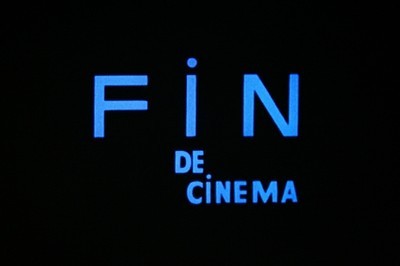
Jean-Luc Godard’s 1967 film Weekend represents a turning point in the director’s career. After a flurry of activity in the 1960s, increasingly straying from traditional notions of narrative, Godard made Weekend, declaring it “end of cinema” and “a film found on the scrap-heap.” It’s his angriest and most aggressively Brechtian 1960s film, an anti-materialist screed and a political and artistic rallying cry to the revolutionary spirit of the May ’68 student protests then stirring across Europe. After Weekend, he would abandon solo “fiction” filmmaking—in favor of working in a Marxist collective and experimenting in the new medium of video—until 1980’s Every Man for Himself.

Weekend, then, is at once the culmination of the director’s 60s period and a refutation of the work an older Godard might have deemed “too bourgeois.” Its content is satirical and militant, but the power of Weekend is in Godard politicization of the form of cinema. The film’s editing, title cards and long takes were all designed not to orient the audience, but to distance them, flying in the face of every convention imaginable in order to create a kind of “counter-cinema.” Yet perhaps the most telling example of the counter-cinema of Weekend isn’t within the image, it’s on the soundtrack. Read more…

Godard-ism: Constructing Philosophy in “Vivre sa vie”

vivre_sa_vie_godard19

[Part of VARIABLES, a series of essays on the art and politics of Jean-Luc Godard]

Jean-Luc Godard is often labeled an intellectual filmmaker, which usually seems like a disparaging term, standing in for something like “didactic” or “obtuse.” And sometimes that may be true. But if Godard is an intellectual filmmaker, it’s not posturing or pretending but a genuine interrogation of concepts in the air around him. 1960s France was a hotbed of political and philosophical discourse, and Godard and his New Wave colleagues of theorists-turned-filmmakers were an integral part of this milieu. It’s only natural that this discourse began seeping into their films.

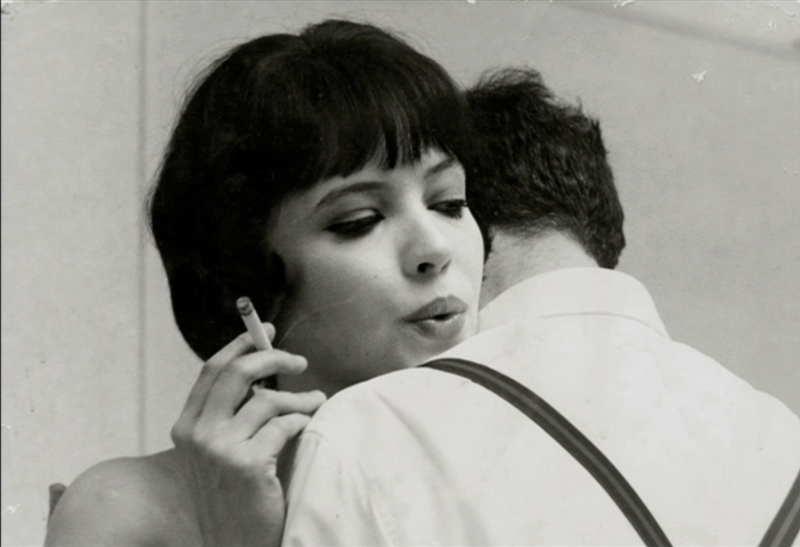
Godard’s Vivre sa vie (1962), for example, is richly imbued with existentialism. In both form and content, this story of a woman’s descent into prostitution frequently seems motivated by the existentialism’s principals of self-formation, but the film’s judgement of this philosophy remains ambiguous. Is Anna Karina’s Nana indeed free to live the life she chooses, or is she instead defined by a conspicuous absence of free will? Is it individual autonomy, then, or the tendency to deny meaning that defines Vivre sa vie? Read more…

Godard the Film Critic

chabrol-godard-cahiers

Jean-Luc Godard and Claude Chabrol at Cahiers du cinéma

[Part of VARIABLES, a series of essays on the art and politics of Jean-Luc Godard]

Before Jean-Luc Godard began his storied career as a film director, he was a critic for the influential magazine Cahiers du cinéma. Mentored by the great film theorist André Bazin, and working alongside other “young Turks” such as François Truffaut, Eric Rohmer and Claude Chabrol, Godard wrote passionately and wrestled with issues of form and politics in cinema. The relationship between the content of a film and its form, and the extent to which both could be said to be political, would come to define much of his own work as a director. Indeed, filmmaking for Godard was a form of criticism, and an examination of his writing reveals much of this criticism at work. Read more…

Where to Start With… Jean-Luc Godard

tumblr-Goddart-Gossip

[Diving into a new cinematic topic can be daunting. This series provides some suggestions on where to begin exploring a director’s body of work, a genre, style or theme. The three suggested films serve as a brief introduction; they’re not complete or authoritative, but will in some way be representative of the topic and hopeful inspire you to watch more, outlined in recommended further viewing.]

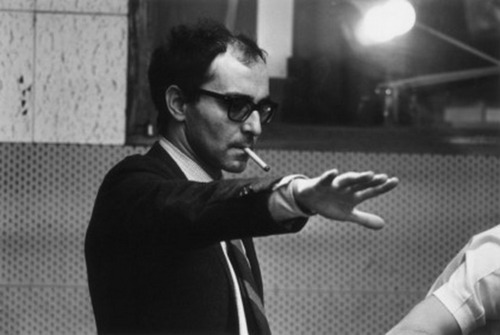
At the age of 83, Jean-Luc Godard, a true titan of film, is releasing his newest work, Goodbye to Language, this year. Far from a victory lap, Goodbye to Language is instead a daring experiment on the aesthetic possibilities of 3D. The release of the film is a great excuse to (re)discover the full breadth of Godard’s incredibly provocative, intellectual, confrontational, dazzling and confounding work—the work not just of a great director, but of one of the essential artists of the second half of the 20th century.

Over the next few weeks, I’ll be posting reviews, articles and even a video essay exploring the philosophy, politics and art of Godard’s extraordinary work here. But where to begin with a career spanning numerous decades and experiments in numerous cinematic media? Try starting here.

Read more…