Voyage of Time: The IMAX Experience (2016)

Voyage of Time: The IMAX ExperienceTerrence Malick / 2016 / fivestar

Active Ingredients: Childlike wonder; painterly images; poetic inquiry
Side Effects: Truncated feel

voyage-of-time-1920x1080-02-1024x576

Terrence Malick’s paean to existence, Voyage of Time: The IMAX Experience, begins with an incantation, an invitation to its watcher. “Dear Child,” it begins. “Today you’re going to watch a movie that shows the story of the universe. From the birth of stars, to modern cities glowing in the night.”

That the film is explicitly addressed to Child is no accident. Whether it speaks to a literal boy or girl, like the ones we see in the film’s opening minutes; the ever-inquisitive inner child within all of us; or the child of the universe that is every living thing is irrelevant. All are one, all yoked together in the unfathomable miracle of existence. Read more…
“The Witch” and the Perversion of Spirituality

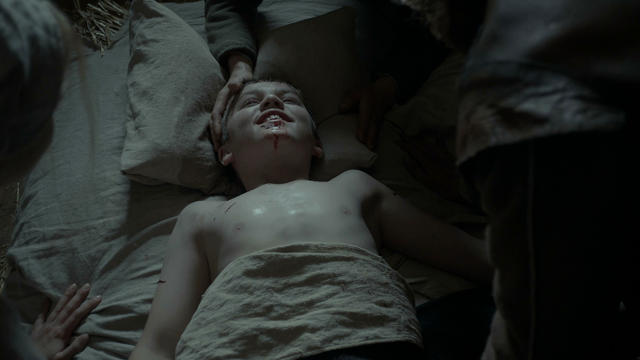
Robert Eggers’ striking debut The Witch is still one of the year’s very best films months after its release. With its creepy period specificity and effective tension that never cheats, the film is a bona fide instant horror classic. And October is a perfect time to revisit the film, or check it out for the first time. My original review can be found here, but this spoiler-filled post explores more of The Witch‘s themes of Satanism as an inversion of Christianity, and a perversion of spiritual ecstasy. Read more…

The Godfather (1972)

The Godfather / Francis Ford Coppola / 1972 / fivestar

Active Ingredients: Duvall and Cazale; Themes of ambition and corruption
Side Effects: Michael’s sudden turn towards the Family

One of the most interesting aspects of The Godfather—whose mammoth reputation threatens to swallow whole a work that is still compelling, alive and occasionally troubling is its stylistic positioning as a classical work in a modern cinematic landscape. Its nostalgic auburn hues, novelistic scope and stately compositions must have felt nearly old-fashioned in a time of “easy riders and raging bulls.” Read more…

Everybody Wants Some!! (2016)

Everybody Wants Some!! / Richard Linklater / 2016 / fourstar

Active Ingredients: Fun, convivial vibe; Cast of characters; Subtlety of insights
Side Effects: Loose structure makes for some awkward rhythms

Nobody makes films like Richard Linklater: warm, rambling, laconic, inviting, and just mellow, man. He has a knack for disarming the viewer in the most unassuming way. There’s no showy gimmicks or ostentatious style, just a naturalistic rhythm and a structure that quietly flies in the face of rigid narrative convention.

Case in point is Everybody Wants Some!!, Linklater’s “spiritual sequel” to Dazed and Confused. It’s a loose ensemble film with no stakes, little incident and even less conflict. It’s about a freshman (Blake Jenner) joining a baseball team in the first few days of college in 1980. He gets to know the guys, goes to some parties, listens to some sweet tunes, meets some girls and muses, with no real sense of urgency or purpose, on the kind of person he wants to become. Read more…

Midnight Special (2016)

Midnight Special / Jeff Nichols / 2016 / fourstar

Active Ingredients: Humanistic tone; Michael Shannon; Emotional undercurrents
Side Effects: Those same emotional moments sacrificed to momentum

Much has been made of Midnight Special‘s comparisons to a specific breed of old-fashioned, family-centered sci-fi films such as E.T., Close Encounters, and John Carpenter’s Starman. It’s true, director Jeff Nichols had these films in mind while crafting his own humane work about the wonderment of experiences beyond our understanding. But these comparisons fail to account for a significant difference in tone. Here, the wonder is fraught with worry, the adventure overshadowed by danger and desperation. Midnight Special isn’t exactly somber, but its tone exposes its concern with we imperfect beings here on Earth, and not simply a romantic Beyond. Read more…

Where to Start With… Apichatpong Weerasethakul

[Diving into a new cinematic topic can be daunting. This series provides some suggestions on where to begin exploring a director’s body of work, a genre, style or theme. The three suggested films serve as a brief introduction; they’re not complete or authoritative, but will in some way be representative of the topic and hopeful inspire you to watch more, outlined in recommended further viewing.]

Apichatpong Weerasethakul—affectionately called simply Joe by writers in the West—is a modern Thai filmmaker, video artist and installation artist. He gained acclaim and exposure in contemporary international art house circles for his 2007 film Syndromes and a Century, and became an even bigger critical success after winning the Palme d’Or at the Cannes Film Festival for 2010’s Uncle Boonmee Who Can Recall His Past Lives. Apichatpong’s films can be oblique, and yes, difficult for the uninitiated, but there’s real warmth and boundless life to discover in his unique worlds. Read more…

Speaking Malick: A Guide to the Director’s Unique Language

With the recent release of the remarkable Knight of Cups, critics and adventurous movie-goers alike have a new Terrence Malick film to grapple with. Unfortunately, the film has largely been met with dismissal rather than careful consideration. Many feel alienated by Malick’s elliptic style, mystified by his lack of traditional narrative. It’s true that Malick employs a radical and expressive cinematic language, but an understanding of his innovative and improvisational production methodology will help to approach his films on their own, unconventional terms. Read more…

Once Upon a Time in China (1991)

Once Upon a Time in China / Tsui Hark / 1991 / fivestar

Active Ingredients: Creative and exciting action; Themes of tradition and modernity
Side Effects: Tangential narratives and shifting focus

2fedc7dd5f93e12456df03a1c924ba87.jpg

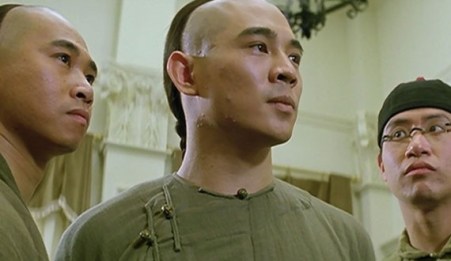
Masterfully choreographed and directed action sequences surround an equally masterful historical epic.

The thematic ambitions of Tsui Hark’s seminal Once Upon a Time in China are evident from the beginning. It’s overture and subsequent introductory sequences are rife with references to the foreign influences manipulating 19th century China, and to the inexorably changing times. Modernity is fast approaching, and in this respect Tsui’s film is similar to Sergio Leone’s Once Upon a Time in the West, in which the construction of the railroad represents the last gasp of the Wild West. And while these showdowns emphasize fists over six-shooters, much of the sentiment and style of the Western can be felt here. Read more…

The Witch (2016)

The Witch / Robert Eggers / 2016 / fourstar

Active Ingredients: Beautifully crafted mood; Exploration of evil; Cast
Side Effects: Unique form leads to odd pacing and rhythms

the-witch

Robert Eggers’ The Witch isn’t just an “assured” cinematic debut—an easy term too often reached for—but a damn near masterful one. An assured film is merely studied and technically proficient; a masterful one is singular and inspired.

Not content to emulate the styles, rhythms or contours of any recognizable formula, The Witch discovers its own shape, its own textures. It doesn’t manufacture chills in trite and familiar ways, but through unnoticed and unexpected tactics that slowly and methodically creep under your skin and stay there. It’s a sustained and uncomfortably close encounter with pure evil. Read more…