The Life and Death of Colonel Blimp (1943)

The Life and Death of Colonel Blimp / Michael Powell & Emeric Pressburger / 1943 / fivestar

Active Ingredients: Narrative structure and emotional tone; Technicolor cinematography
Side Effects: A bit overlong; a few choppy edits

Michael Powell and Emeric Pressburger’s gorgeous Technicolor masterpiece The Life and Death of Colonel Blimp is a film of such visual sophistication and flawless construction that its technical achievements nearly overshadow its bittersweet, complex but unshakable love for its characters. Nearly. Read more…

The Best Performances of 2013

2014 is already a month and a half old, but it’s always fun to indulge in more end-of-the-year superlatives. You can read the countdowns of my Top 20 films here and here, but in this post I’ll share some of my favorite lead and supporting performances of the year. In past years, I’ve struggled to come up with even 10 performances worth celebrating, but 2013 gave us such strong work in all four categories: Lead Actor, Lead Actress, Supporting Actor and Supporting Actress. Please feel free to add a comment and share your own thoughts below.

Oscar Isaac in Inside Llewyn Davis

Read more…

Grand Piano (2014)

Grand Piano / Eugenio Mira / 2014 / threestarAvailable on Netflix Instant at time of posting

Active Ingredients: Limited narrative scope; Genre silliness
Side Effects: Believability; Thematic shallowness

A high-concept exercise, Grand Piano hits its notes brisky and confidently but with fewer surprises than the concert it depicts. The film is about Tom Selznick (Elijah Wood), the best concert pianist of his generation, who returns to the stage five years after a disastrous and very public meltdown. While Tom is simply concerned with straightening his tie and keeping his composure, he’s got a much bigger problem: a mysterious sniper (John Cusack) has a gun trained on him, and is threatening to fire if he plays one wrong note. Read more…

The LEGO Movie (2014)

The LEGO MoviePhil Lord & Christopher Miller / 2014 / fourstar

Active Ingredients: Pace; Creativity; Vocal performances
Side Effects: Conventional narrative arc; Overloaded visuals

lego-movie2.jpg

In 1962, Stanley Kubrick’s Lolita was advertised with the famous tagline “How did they ever make a movie of Lolita?” The source material of 2014’s The LEGO Movie might say a lot about how the sources of our inspiration have changed in the 50 years since Kubrick’s film, but I thought about the Lolita tagline walking into this delightful and fast-paced animated feature. How would they go about “adapting” a line of children’s building toys into a narrative feature? As it turns out, directors Phil Lord and Christopher Miller (21 Jump Street) have made a sweet homage to the best of what these multi-colored blocks has to offer: creativity. Read more…

The Top 20 Films of 2013 – Part 2

This week I’m happy to share my Top 10 films of 2013. You can see my 11-20 here, and a ranked list of all the films I saw this year here, but 2013 was such a strong year for film that I’m glad to finally get to the top of the list.
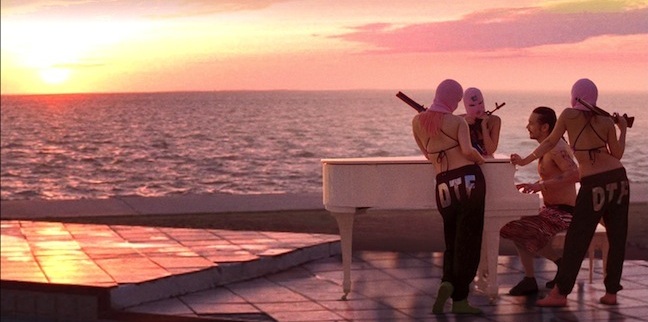
Spring Breakers

This year’s Hollywood prestige films really delivered, with interesting entries from American directors both old and new. For once, the Oscars couldn’t go too wrong (except, of course, they did by snubbing Inside Llewyn Davis). Despite this high quality of American output, fewer great international films reached our screens. Only one non-English film made my Top 10, the lowest since I began compiling lists this decade, though plenty more enriched my film-watching year (No, PietaYou Ain’t Seen Nothing Yet).

A few noticeable themes and trends emerged as well, such as critiques/celebrations of materialistic excess (The Wolf of Wall Street, The Blind Ring, Spring Breakers, Pain & Gain), and a fractured, impressionistic editing style influenced by Terrence Malick (Spring Breakers, Upstream Color, Ain’t Them Bodies Saints and Malick’s own To the Wonder.)

Let me know what you think. Please leave a comment below.

Regrets: Blue is the Warmest Color, Dallas Buyers Club, The Wind Rises, The Past
Honorable Mentions: Computer Chess, Enough Said, All Is Lost, The World’s End

Read more…

The Top 20 Films of 2013 – Part 1

2013 was an incredibly rich year for cinema—certainly the richest since I’ve been writing FilmCapsule.com—so there’s more excuse than ever to extend my year-end list to 20 titles. Hopefully this collection can shed some light on great films both foreign and domestic that you might not encounter on other critics’ lists. Stay tuned for my Top 10 later, but in the meantime consider catching up some of these titles, many of which are already available on Netflix Instant.

Something in the Air

20) Stories We TellSarah Polley

Exploring the deeply personal domestic drama of her own parentage, Sarah Polley turns her documentary Stories We Tell into a powerful and universal investigation into memory and narrative. She’s concerned not just with uncovering the identity of her biological father—a compelling narrative mystery in its own right—but with interrogating how individual perspectives and the march of time obfuscate any notion of “truth.” Polley may have pushed her use of contrasting documentary form even further, but as it stands the film gestures towards the notion that truth can only be found within a multiplicity of voices. Read more…

At Berkeley (2013)

At Berkeley / Frederick Wiseman / 2013 / fivestar

Active Ingredients: Thematic editing; Political tone without didacticism
Side Effects: Improvisational feel to photography; Inconsistency in later scenes

“What is it about Berkeley,” a professor asks her classroom in Frederick Wiseman’s new documentary. Over the course of the film, we see several possible answers. It’s an historical myth, an ideal and a hotbed for radical politics. It’s a collection of classrooms, boardrooms and lawns; a concert hall, a library and a stairwell. It’s a location meant for learning and studying. The problem only arises when these locations are filled with people.

Like all of Wiseman’s films, At Berkeley painstakingly details how public institutions, by definition, pit the communal against the personal. The University of California at Berkeley, like any public institution, is equally composed of its organizational mission and the people it serves, and while these two elements need each other to exist, they necessarily find themselves at odds. Filmed over two particularly tumultuous years around campus, which find the university struggling to cut costs while continuing to offer high-quality education, At Berkeley exposes the wonderful contradictions that make any institution succeed—and fail—to function. Read more…

All Is Lost (2013)

All Is Lost / J.C. Chandor / 2013 / fourstarAvailable on Netflix Instant at time of posting

Active Ingredients: Dramatic purity; Pacing and visual composition
Side Effects: Clarity of action; A few showy moments

I’d be hard-pressed to come up with another writer/director whose first two features are more dissimilar than J.C. Chandor’s. 2011’s Margin Call is an ensemble piece following a dozen main characters in the hours leading up to the recent financial meltdown, its script packed to the gills with speeches, banter, exposition and recapitulation. All Is Lost, on the other hand, features only one actor (a world-weary Robert Redford) and almost no on-screen dialogue. It’s a bold transition from Chandor’s debut to his sophomore effort, and it’s this newer film that proves his talents by wringing so much out of so little. Read more…

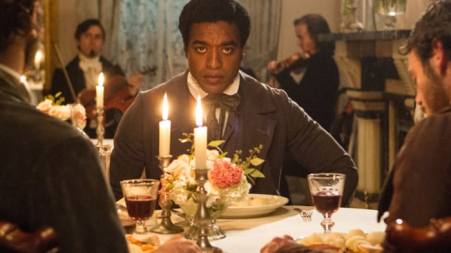
12 Years a Slave (2013)

12 Years a SlaveSteve McQueen / 2013 / fourstarNYFF51-135x45

Active Ingredients: Ejiofor and Fassbender; Painterly images; Acute psychological understanding
Side Effects: Distracting star presence, including Brad Pitt

rs-150412-20131004-slave-x624-1380914594.jpg

[12 Years a Slave is part of The New York Film Festival, and opens in limited release on October 18th.]

Only three features into his filmmaking career, visual artist Steve McQueen has cemented his position as a major cinematic talent. His subject matter is challenging and volatile (prison brutality in Hunger, sex addiction in Shame), and his compositional skill and poetic, textured imagery supply the visual weight to match. McQueen’s films can be aggressive and heavy, but there’s always a sensitivity and even a tenderness the underlines the experience. Tackling the physical violence and violent psychology of slavery with his harrowing new film 12 Years a Slave, McQueen demonstrates both of these tonal tendencies and confirms his status as a director to watch. Read more…

Gravity (2013)

GravityAlfonso Cuarón / 2013 / threestar

Active Ingredients: Rollercoaster thrills; Technical accomplishments
Side Effects: Immateriality; Lack of formal precision; George Clooney

Gravity has proven to be one of the rare films that captures the attention and esteem of critics and audiences alike. Nor should it come as a surprise. The film boasts a talented and ambitious director in Alfonso Cuarón (Children of Men), a reliable cast, and even delivers both exciting action and thematic weight inside a grand sci-fi spectacle. Gravity is a ride I was happy to go on. Still, I find myself shying away from the hyperbolic response the film has received. It may, as Time Magazine declares, “show us the glory of cinema’s future,” but is Gravity‘s weightlessness really what we want for the future of cinema? Read more…