Super 8 (2011)

Super 8 / J.J. Abrams / 2011 / twostar

Active Ingredients: Period setting; Sympathetic characters; Child casting; Train sequence
Side Effects: Emotional backstories; Over-sentimentality; No sense of danger

Billed as a return to the exciting yet tender family blockbusters of the 70s and 80s, Super 8 is a calculated charmer. A group of adolescent filmmakers, outsiders with a precocious, aw-shucks passion for making movies, witness a train wreck that unleashes a secret which the scary military men will stop at nothing to conceal. The film is at its best early on, when it has the luxury to establish both a convincing group of young characters and a vague promise of danger and adventure. Joel Courtney as the film’s withdrawn and sensitive protagonist in particular earns the audience’s sympathy. His budding friendship with the cool girl at school (Elle Fanning) is heartfelt and delicately handled. Read more…

Rushmore (1998)

Rushmore / Wes Anderson / 1998 / fivestar

Active Ingredients: Mix of humor and tenderness; Bill Murray; Detailed design
Side Effects: Perhaps too sweet for some

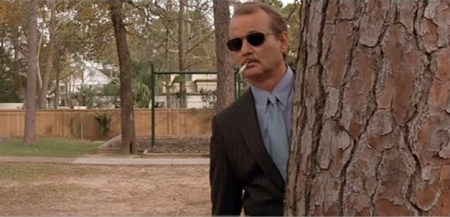
Everyone needs his own passion, his “Rushmore”. Without a purpose, even an unhealthy obsession, we’d be lost. Beyond the characteristic quirk and indie style and sensibility of Wes Anderson’s film (by now endlessly imitated), lies a richly decorated and detailed world, full of humanity and populated by characters defined by the presence or absence of this one true passion. The trio of unlikely friends at the film’s heart—a smart alec highschooler, a mourning teacher and a depressed businessman—are each struggling to find their own Rushmore, and are looking for it in the wrong places. Read more…

Film Capsule Podcast #1: Another Earth and Bellflower

Check out Film Capsule’s first foray into the world of podcasting!

My friend Ian and I recently sat down to discuss two movies featured at the Independent Film Festival of Boston: Another Earth, directed by Mike Cahill, and Bellflower, directed by Evan Glodell. While very different in content, tone and pace, the two films nonetheless share a certain indie integrity. They both manage to be totally and convincingly their own films. Both have garnered some acclaim at other film festivals, and are worth looking for when they make it to a theater near you.

Any questions, thoughts or feedback? We’d love to hear from you! Please write us an e-mail at filmcapsuleblog@gmail.com or comment on this post or over at Soundcloud.

Special thanks to Old Men Playing Chess for the music.

Art on Film: June at the MFA

This June at Boston’s Museum of Fine Arts sees a spate of new documentaries covering a wide range of art and artists, including fine arts, cinematography and literature. Capturing the essence of one artistic medium through the lens of another isn’t easy. Just look at the many dull film adaptations of good novels, content to simply remain “faithful” to the source material. The fact is, each medium is different, each with its own set of strengths and weaknesses in communicating an idea. It takes a special documentarian, then, to know that no matter what the topic, he must still make a film, a piece of art that will live or die not on the power of its subject, but on its own cinematic merits.

Read more…

Silent Light (2007)

Silent Light / Carlos Reygadas / 2007 / twostar

Active Ingredients: Crisp cinematography; Convincing locations
Side Effects: Inflated drama; Flat acting; Pretend profundity

001476d5_medium

What is it that keeps most audiences from embracing art house films? Is it really reading subtitles and swallowing more “difficult” storytelling, devoid of the Hollywood ending? With so much talk of the mainstream clamoring for “originality” these days, I doubt that ambiguity alone sours people on the art house. Rather, it’s a fear of pretension, those vapid, high-minded, glacial films, that sends people running for the multiplex. Silent Light is exactly that type of film, the type of film reluctantly accepted like medicine. Come on, swallow, it’s good for you. It’s the type of film that keeps people from realizing that the art house and vitality and, god forbid, fun are not mutually exclusive. Read more…

I Saw the Devil (2011)

I Saw the Devil / Kim Jee-woon / 2011 / fourstar

Active Ingredients: Visual wit; Acting; Pace and energy
Side Effects: Ending; Revenge movie cliches

450_1000.jpg

ver the past decade, Korean filmmakers have breathed new life into genre filmmaking, made listless by so many bland American entries. Bong Joon-ho in particular has produced an amazingly strong filmography demonstrating his unique skill at handling disparate tones, making his films unpredictable but always under control. With I Saw The Devil, Kim Jee-woon proves that he has the skill and vision to match his peers.

The film is a dark and twisted tale of torture and violence—a look into the face of evil—and yet a pronounced style, a strong sense of pacing and unexpected moments of levity and even humor keep the film from feeling laborious. Its tone is definitely somber and its violence unflinching, but the film takes place in a heightened universe where villains pursue evil with gusto and relish. Read more…

Interview with Documentarian Bess O’Brien

“Who needs Hollywood?” This hypothetical question, which adorns the website of Vermont’s Kingdom County Productions also serves as the company’s motto. It’s a constant reminder that the closed-off studio system of Hollywood isn’t the only place to produce films. Kingdom County’s own backyard does just fine. After more than a dozen films, Kingdom County Productions remains dedicated to capturing the unique voice and spirit of their own part of the country. Ask Us Who We Are, their new documentary about the extraordinary people that comprise Vermont’s foster care system, is currently touring the Green Mountain State and will soon make its way into New England and beyond. Director Bess O’Brien answers my questions about her documentary and making films with a strongly local focus.

Read the interview.>>

Bucking Broadway (1917)

Bucking Broadway / John Ford / 1917 / fourstar

Active Ingredients: Photography; Romance scenes; Naturalistic acting
Side Effects: New York scenes


John Ford, one of America’s great directors, made at least 62 silent films between 1917 and 1927. Today, 85% of those are believed to be lost, and, judging by the quality of Bucking Broadway, that’s a real shame. Bucking Broadway, like many early Ford westerns, stars Harry Carey as the recurring character Cheyenne Harry. Cheyenne is often considered the first of Ford’s “good bad men,” dark and complex protagonists, though in this film the character is a tamer version of the archetypical western male hero. Here, Cheyenne is a cowboy engaged to the rancher’s daughter, and he’s much more willing to settle down than the traditional western man in film. Interestingly, he must actually become violent to save his fiancee from the “snake of a man” with whom she elopes, rather than choose to hang up his spurs for the love of a good woman. Read more…

RoboCop (1987)

RoboCop / Paul Verhoeven / 1987 / fourstar

Active Ingredients: Surprising action; Satire; Good ideas
Side Effects: Villains; Thin central plot

robocop-1987-ed-209-dick-jones

RoboCop—both the film and the crimefighter—are full of contradictions. The character is part man, part machine; the film is part bloody action flick, part smart comedic satire. It’s also one of the rare films to do both well. It’s an action film with brains, but with balls, too. Read more…

More Screenwriting Tips from Andrew Lanham

I recently interviewed screenwriter Andrew Lanham, whose script The Jumper of Maine earned him a Nicholls Fellowship from the Academy of Motion Pictures Arts and Sciences as well as two coveted awards from the Austin Film Festival. He spoke about his new-found success in the interview, which you can find at NewEnglandFilm.com here. Lanham also took the time to share some screenwriting tips that have helped him kick start his career.

Read more…